


How to Source Timber Trusses Globally in 2026?
Sourcing timber trusses globally in 2026 requires more than comparing factory prices. Buyers must examine engineering records, timber species, moisture control, production capacity, and delivery reliability. A truss may look identical in a photograph, yet differ greatly in grading, joint design, and protective treatment.
Architect and timber construction expert Michael Green has said, “Wood is the only structural material that grows.” That idea matters during procurement. Timber trusses begin as a biological material, not a uniform industrial product. Climate, forest management, drying methods, and storage conditions can influence performance. A professional sourcing process should therefore request mill certificates, structural calculations, treatment records, and recent project references.
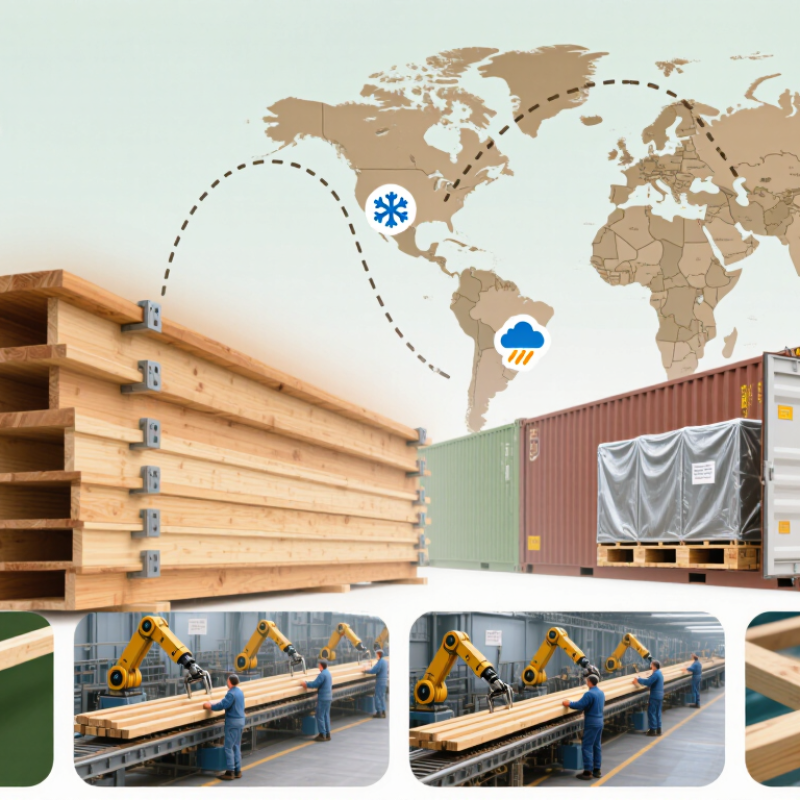
Details decide outcomes. Check whether the supplier understands local snow, wind, seismic, and fire requirements. Confirm connection hardware before production begins. Ask how the trusses will be packed inside a shipping container. Wet packaging can create expensive problems.
The process is not perfectly linear. A low quotation may hide weaker documentation or difficult port handling. A respected supplier may still miss a deadline. That assumption can fail.
Experienced buyers compare total landed cost, not factory price alone. They also inspect sample joints, review quality-control photographs, and arrange independent inspections when practical. Communication matters too. A clear drawing revision can prevent weeks of rework.
This guide explains how to identify qualified manufacturers, verify technical claims, manage international logistics, and build a safer supplier shortlist. It also examines common sourcing mistakes. Some are surprisingly simple. Timber trusses deserve careful decisions.
Define Project Requirements and Timber Truss Specifications
Before contacting overseas suppliers, define the building clearly. Record the span, roof pitch, truss spacing, eaves height, and support positions. A simple sketch often reveals missing dimensions. For example, an 18-metre clear span with trusses at 600-millimetre centres needs different engineering from a 12-metre storage roof. State the roof covering, insulation depth, ceiling weight, and expected maintenance loads. Snow, wind, seismic activity, and temporary construction loads must also be included.
Specify timber by structural grade, species or accepted equivalent, moisture range, and treatment requirements. For many interior applications, timber near 12–18% moisture is a practical target, but local conditions may require adjustment. Request drawings showing member sizes, joint details, connector types, camber, tolerances, and lifting points. Ask for test reports and calculation packages prepared for the project location. Local approval still matters. A supplier’s standard design may not satisfy the destination code.
Small details create expensive delays. Confirm maximum transport length, bundle protection, unloading equipment, and replacement procedures for damaged members. I would also request one sample joint or a detailed connection photograph before production. This has prevented misunderstandings in past sourcing work. Some plans look complete. They are not. One common mistake is choosing a low quoted price before confirming engineering assumptions. Recheck every load, dimension, and revision with a qualified structural engineer. Timber quality can vary between batches, so inspection records should accompany each shipment.
How to Source Timber Trusses Globally in 2026? - Define Project Requirements and Timber Truss Specifications
Practical specification matrix for comparing timber truss supply options, preparing enquiries, and aligning structural, environmental, logistics, and compliance requirements before procurement.
| Specification Dimension | Recommended Requirement | Typical Options or Values | Why It Matters for Global Sourcing | Documents or Verification | Priority |
|---|---|---|---|---|---|
| Project Use | Define the building type, occupancy, design life, and installation environment. | Residential roof; agricultural building; warehouse; commercial building; pedestrian structure. | Use category affects loading assumptions, fire requirements, durability, connection design, and inspection scope. | Architectural drawings, structural design brief, building classification, design-life statement. | High |
| Design Location | State the country, city, site elevation, exposure conditions, and governing building regulations. | Coastal; inland; high-wind zone; seismic region; snow region; tropical or cold climate. | Wind, snow, seismic, humidity, corrosion, and temperature conditions vary significantly between regions. | Site survey, local code summary, wind-speed data, snow-load data, seismic parameters. | High |
| Truss Geometry | Provide span, overall height, roof pitch, heel height, bearing width, and overhang. | Clear span; low-slope roof; pitched roof; attic truss; scissors truss; parallel-chord truss. | Geometry determines member lengths, panel-point locations, shipping dimensions, lifting requirements, and manufacturing feasibility. | Dimensioned drawings, framing plans, roof layout, truss profiles, interface details. | High |
| Structural Loads | Separate permanent, imposed, environmental, and temporary construction loads. | Self-weight; roof covering; ceiling; insulation; maintenance load; snow; wind uplift; solar equipment; suspended services. | Accurate load combinations prevent underdesign and reduce unnecessary timber volume and connection costs. | Load schedule, load combinations, equipment layout, roof-covering data, engineering calculations. | High |
| Timber Species | Specify an approved species group or performance class rather than relying only on a trade name. | Spruce; pine; fir; Douglas fir; larch; eucalyptus; hardwood species where locally approved. | Species influence density, stiffness, strength, durability, availability, treatment compatibility, and cost. | Species declaration, botanical identification where required, strength-property tables, chain-of-custody records. | High |
| Strength Grade | Specify the required visual or machine strength grade and the design-property system. | European strength classes such as C24; North American dimension-lumber grades; regionally recognized structural grades. | Strength grades are not directly interchangeable across countries without engineering conversion and code verification. | Mill grading documentation, machine-grading records, third-party inspection, structural design calculations. | High |
| Moisture Content | Set a moisture target suitable for the service environment and installation sequence. | Usually kiln-dried structural timber; commonly around 15% to 20% at dispatch, subject to local requirements. | Moisture affects shrinkage, dimensional stability, mold risk, connection performance, and weight during transport. | Moisture test records, kiln-drying records, inspection sampling plan, packaging requirements. | High |
| Service Class or Exposure | Classify the expected moisture and temperature conditions during service. | Dry internal environment; intermittently humid environment; exterior or persistently damp environment. | Exposure classification affects allowable stresses, durability design, preservative treatment, and fastener selection. | Environmental classification, ventilation details, cladding details, durability specification. | High |
| Preservative Treatment | Require treatment only where the service environment, local regulation, or durability assessment justifies it. | Untreated kiln-dried timber; water-based treatment; pressure treatment; treatment compatible with connectors. | Treatment can affect moisture, corrosion risk, processing, odor, disposal, and import documentation. | Treatment certificate, chemical retention data, penetration report, safety documentation, compatibility statement. | Medium |
| Truss Configuration | Select a configuration based on roof form, usable space, services, and structural demand. | Fink; howe; fan; attic; scissors; raised-heel; monopitch; parallel-chord. | The configuration controls internal forces, ceiling shape, insulation depth, duct routing, and manufacturing complexity. | Truss layout, member schedule, panel-point design, service-zone requirements. | High |
| Connections | Define connector type, material, corrosion protection, plate size, and installation method. | Metal nail plates; bolts; screws; nails; proprietary engineered connectors where approved for the project. | Connections often govern capacity, production tooling, quality control, field repair procedures, and approval requirements. | Connection calculations, product assessment, galvanizing or coating specification, installation instructions. | High |
| Applicable Standards | Identify the design and product standards accepted by the project authority. | EN 1995-1-1; EN 14081; EN 14250; CSA O86; AS 1720.1; NDS-based design; applicable national building codes. | Using a recognized design basis allows technical comparison and reduces the risk of non-accepted calculations. | Design-basis statement, engineer-of-record approval, conformity documents, test reports, calculation package. | High |
| Fire Performance | Define fire-resistance rating, reaction-to-fire requirements, and protection strategy where applicable. | Exposed timber; protected timber; gypsum-board protection; intumescent coating; compartmented roof assembly. | Fire requirements can change member sizes, protective layers, connection details, inspection procedures, and material selection. | Fire strategy, tested assembly data, fire-rating calculations, coating certificates, inspection records. | High |
| Dimensional Tolerances | Set acceptable tolerances for span, height, bow, twist, plate position, and bearing alignment. | Project-specific tolerances coordinated with wall framing, roofing, ceiling, and prefabricated components. | Consistent tolerances reduce installation delays, site modifications, roof-line irregularities, and rejection risk. | Inspection and test plan, tolerance schedule, dimensional inspection records, corrective-action procedure. | Medium |
| Packaging and Protection | Specify bundling, separators, edge protection, water protection, labeling, and handling points. | Strapped bundles; breathable covers; moisture-resistant wrapping; forklift pockets; lifting marks. | Long-distance transport exposes timber to rain, condensation, impact, contamination, and handling damage. | Packaging specification, loading photographs, bundle list, handling instructions, weather-protection plan. | High |
| Shipping Method | Compare container, break-bulk, or flat-rack options according to truss dimensions and shipment volume. | Containerized shipment for compact bundles; break-bulk or specialized equipment for oversized assemblies. | Transport mode affects maximum dimensions, loading sequence, freight cost, port handling, and damage exposure. | Packing list, dimensional cargo plan, gross and net weights, loading diagram, freight quotation. | High |
| Indicative Procurement Lead Time | Build a schedule from approved drawings through production, inspection, shipping, customs, and site delivery. | Design and approval: 2–6 weeks; production: 2–8 weeks; international transport and clearance: 3–8 weeks. | Actual timing depends on design complexity, order volume, seasonal capacity, port congestion, customs, and destination distance. | Integrated programme, approval milestones, production schedule, shipping schedule, contingency allowance. | High |
| Sustainability Requirements | Define legal timber sourcing, recycled content, carbon reporting, and environmental documentation. | Legally harvested timber; certified chain of custody where required; environmental product information; carbon data. | Documentation may be required for public projects, green-building assessments, import controls, and environmental reporting. | Legality declaration, chain-of-custody documents, harvesting documentation, environmental declarations, carbon calculation. | Medium |
| Quality-Control Plan | Define inspection points from raw timber receipt to final loading. | Incoming timber inspection; moisture testing; grading verification; connector inspection; final dimensional checks. | A documented plan makes supplier comparison objective and provides evidence for claims, acceptance, and corrective action. | Inspection and test plan, sampling levels, calibration records, nonconformance reports, release certificate. | High |
| Commercial Comparison Basis | Request comparable prices using the same quantity, specification, Incoterm, packaging, and delivery location. | Price per truss; price per project; delivered cost; cost per square metre of roof area; optional engineering and treatment charges. | A low factory price may become less competitive after engineering, packaging, inland haulage, customs, duties, and site handling. | Itemized quotation, Incoterm, payment terms, validity period, exclusions, warranty, delivery assumptions. | High |
Related Posts
-
Top 5 Timber Trusses for Your Next Construction Project?
-
2026 Top Trends in Timber Trusses for Sustainable Construction?
-
10 Best Timber Truss Designs for International Buyers
-
Top Timber Roof Truss Manufacturers for Global Buyers
-
2026 Best Prefab Walls for Global Buyers?
-

Top 10 Tips for Choosing Framing Lumber: A Complete Buying Guide