Choosing the best pre built wall panels from China requires more than comparing prices or glossy product photos. A reliable decision starts with the panel’s core materials, surface finish, insulation value, fire performance, and manufacturing consistency. These details influence comfort, safety, installation speed, and long-term maintenance.
Professor Alistair Gibb, a respected researcher in off-site construction, has cautioned that off-site methods are “not a panacea.” That warning matters here. Pre built wall panels can reduce site labor and material waste, but they still need accurate drawings, careful packaging, and trained installation teams. A panel made for a dry warehouse may fail in a humid coastal project. Small gaps can also create visible thermal bridges.
This guide examines Chinese suppliers through practical evidence. We consider factory experience, quality-control procedures, moisture protection, connection systems, customization options, and export documentation. We also look at whether suppliers provide real project records instead of vague marketing claims. Certifications deserve attention, but certificates alone cannot prove consistent production.
Some conclusions may remain imperfect. Product specifications can change, and online information is not always complete. Buyers should request current test reports, physical samples, shop drawings, and independent inspections before placing large orders. That extra work feels slower. It often prevents expensive surprises.
The strongest supplier is not automatically the cheapest one. It is the manufacturer that communicates clearly, controls tolerances, protects panels during shipment, and supports installation after delivery.
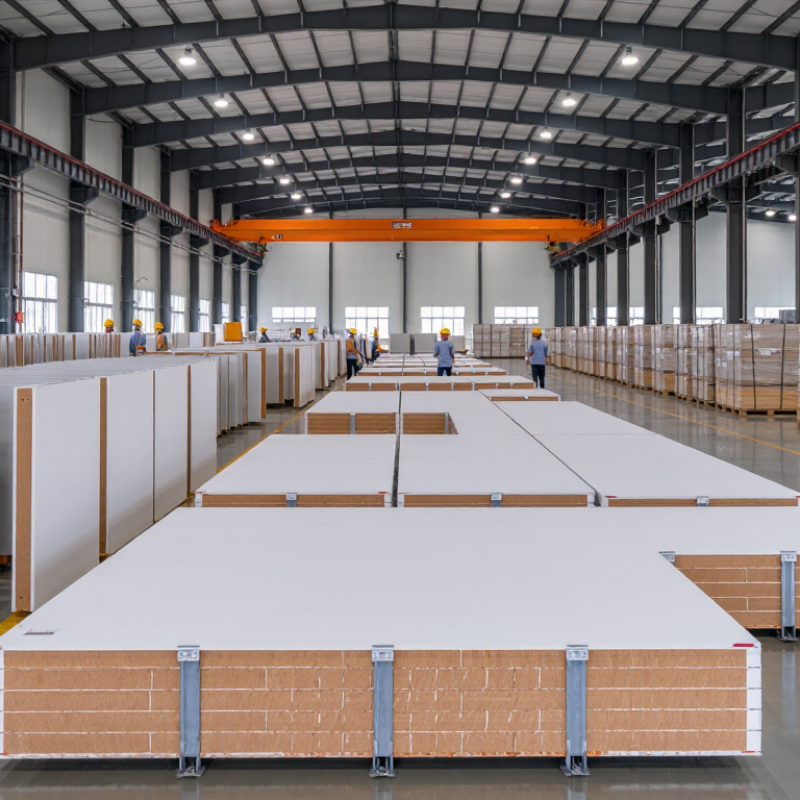
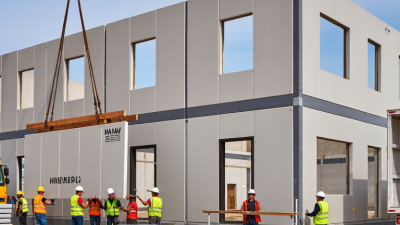
Pre-built wall panels are factory-assembled wall sections delivered ready for site installation. They may include framing, insulation, sheathing, vapor control layers, windows, wiring, or service openings. In practice, a digital drawing guides cutting and assembly. Workers then connect panels with screws, brackets, seals, and lifting equipment. A completed wall can arrive like a large, labeled puzzle piece.
The method reduces repeated site tasks. The Dodge Construction Network’s 2024 prefabrication research reports continued growth in off-site construction use, driven by schedule control and labor shortages. A separate Fortune Business Insights report valued the global prefabricated construction market at about 153.7 billion US dollars in 2023. These figures support the commercial case, but they do not guarantee quality. Panel performance still depends on moisture protection, joint design, transport, and installation accuracy.
Chinese suppliers often offer high-volume production, customized dimensions, and integrated insulation packages. Buyers should request thermal conductivity values, fire-test evidence, structural calculations, factory inspection records, and sample joints before ordering. Check the details. A panel may look precise in a catalog yet arrive with damaged edges or mismatched openings. My practical concern is tolerance: a few millimeters can affect windows, plumbing, and airtightness. Factory production is powerful, but it is not magic. The best panel is the one matched to local codes, climate, handling limits, and the installer’s actual skill.

Pre-built wall panels are factory-made wall elements that are transported to the construction site and assembled with joints, fasteners, or adhesives. The chart compares typical 100 mm panel-core values. PU/PIR panels generally provide the highest thermal resistance, while AAC panels offer greater mass and durability. Actual performance depends on density, surface layers, joints, moisture, and local fire-rating requirements.
China produces several practical types of pre-built wall panels for homes, offices, warehouses, and temporary buildings. EPS sandwich panels are lightweight and economical, with a metal skin around a foam core. They suit partitions and low-load exterior walls. Rock wool panels provide stronger fire resistance and better acoustic performance. They are common in factories, workshops, and buildings near busy roads.
PU and PIR panels offer higher thermal insulation in a thinner profile. They can help control indoor temperatures, especially in cold storage rooms and energy-conscious buildings. Calcium silicate wall panels are rigid, smooth, and resistant to moisture. They are often used for interior partitions and utility areas. Some Chinese factories also produce fiber cement, magnesium oxide, and wood-plastic composite panels. Each material behaves differently during cutting, fastening, and long-term exposure.
Look closely at the core density, panel thickness, joint design, and surface coating. A low price can hide weak edges or uneven insulation. Ask for test reports covering fire performance, thermal conductivity, water absorption, and bending strength. Factory quality control matters, but installation matters too. Poorly sealed joints can waste the panel’s insulation value. One practical mistake is choosing a panel by appearance alone. A glossy surface may look impressive, yet it can scratch easily during transport. Sample testing is wiser than trusting photographs. Weather conditions, local building rules, and the installer’s experience should guide the final selection.
Comparing Chinese wall panels starts with the core, not the surface pattern. Common options include AAC, fiber-cement, magnesium-oxide, calcium-silicate, and insulated sandwich panels. Ask for density, thickness tolerance, water absorption, thermal conductivity, and formaldehyde test results. A supplier should provide batch numbers and laboratory dates. The 2023 UNEP Global Status Report says buildings created 37% of global energy and process-related CO2 emissions in 2022. Insulation performance is a cost issue, not decoration.
Construction quality appears at the joints. Check tongue-and-groove accuracy, screw spacing, edge strength, and panel flatness. Request test records for fire resistance, impact, acoustic transmission, and moisture cycling. For fire claims, verify the test method and assembly thickness against GB/T 9978.1 or EN 13501-1. Loose-panel results cannot prove a complete wall system. This distinction is often missed. During inspection, cut one sample from a sealed crate. Compare its core with the declared material. It feels slow. It prevents expensive surprises.
Also inspect packaging and installation instructions. Look for corner protection, dry storage requirements, and compatible sealants. The IEA’s Buildings 2023 report places buildings at about 30% of global final energy demand. Small U-value differences can matter across a large floor area. Do not trust appearance alone. A glossy surface may hide weak edges, uneven density, or moisture damage. Third-party accreditation helps, but site records still matter. Suppliers sometimes provide excellent laboratory results and weak installation guidance. That gap deserves careful questioning.
| Panel Material | Typical Construction | Common Thickness | Approximate Density | Thermal Conductivity | Fire Performance | Acoustic Performance | Moisture and Durability | Installation Characteristics | Best-Fit Applications | Key Construction-Quality Checks |
|---|---|---|---|---|---|---|---|---|---|---|
| Autoclaved Aerated Concrete (AAC) Panel | Factory-produced aerated concrete reinforced with corrosion-protected steel mesh or bars. | 75–200 mm | Approx. 450–750 kg/m³ | Approx. 0.10–0.18 W/m·K | Non-combustible mineral material. Fire-resistance duration depends on thickness, reinforcement, joints, and the tested wall assembly. | Generally good because of its mineral mass; performance depends on panel thickness, joints, and surface finishes. | Not a waterproof barrier by itself. Requires suitable exterior render, sealants, flashing, and protection from prolonged saturation. | Requires lifting equipment or appropriate handling because of panel weight. Mechanical fixing and properly detailed joints are essential. | Exterior infill walls, fire-rated partitions, residential and commercial buildings. | Check density consistency, dimensional tolerance, reinforcement placement, panel cracking, edge damage, moisture content, lifting anchors, and joint details. |
| EPS Cement Sandwich Panel | Expanded polystyrene core bonded between cement-based or fiber-cement facings, often with embedded wire reinforcement. | 50–150 mm | Approx. 250–700 kg/m³, depending on facings and core density | Approx. 0.045–0.12 W/m·K | Facings are generally non-combustible, but the EPS core is combustible. Fire performance must be confirmed for the complete tested assembly. | Moderate. Better performance is achieved with heavier facings, sealed joints, and additional lining layers. | EPS has low water absorption, but exposed facings and joints can absorb water if not sealed. Protect from impact and ultraviolet exposure. | Lightweight and relatively easy to cut and install. Requires accurate alignment, mechanical anchoring, and reinforced joint treatment. | Interior partitions, low-rise enclosures, temporary buildings, and applications where low weight is important. | Verify EPS core density, core-to-facing bond, facing thickness, wire mesh coverage, panel flatness, adhesive coverage, and joint reinforcement. |
| Rock Wool Sandwich Panel | Stone wool or mineral wool core bonded between coated steel sheets or other protective facings. | 50–200 mm | Approx. 80–160 kg/m³ for the mineral wool core | Approx. 0.035–0.045 W/m·K | Mineral wool is generally non-combustible. The final fire rating depends on core orientation, steel thickness, joints, fasteners, and the tested system. | Good sound absorption and moderate-to-good airborne sound reduction, especially with correctly sealed joints. | Mineral wool can lose insulation performance when wet. Edges, cut-outs, and penetrations must be protected against water ingress. | Fast dry installation with relatively low structural load. Requires compatible screws, washers, flashings, and controlled joint compression. | Factories, warehouses, workshops, cold-weather buildings, and projects prioritizing fire safety and acoustic control. | Check core density, fiber orientation, lamination quality, steel coating thickness, panel squareness, concealed joint fit, fastener spacing, and water-shedding details. |
| PU or PIR Insulated Sandwich Panel | Rigid polyurethane or polyisocyanurate foam core between prefinished steel or aluminum facings. | 40–200 mm | Approx. 35–45 kg/m³ for the foam core | Approx. 0.020–0.028 W/m·K for the core | Foam is combustible to varying degrees. PIR may offer improved reaction-to-fire performance, but the required rating must be verified through a complete tested assembly. | Moderate. Acoustic results depend heavily on panel geometry, facings, joint sealing, and interior lining. | Closed-cell foam has low water absorption, while joints, penetrations, and damaged coatings remain potential leakage points. | Very lightweight and quick to install. Suitable for large spans, but thermal bridges at fasteners and joints must be controlled. | Cold rooms, insulated warehouses, clean areas, agricultural buildings, and energy-efficient enclosures. | Check foam density, core continuity, adhesion to facings, dimensional stability, steel coating, cam-lock or lap-joint fit, sealant continuity, and thermal-bridge treatment. |
| Fiber-Cement Board Panel | Dense cementitious board, sometimes used as a single board or as the outer face of a framed composite wall system. | 6–25 mm per board; thicker systems use multiple layers | Approx. 1,200–1,600 kg/m³ | Approx. 0.25–0.50 W/m·K | Generally non-combustible or limited-combustibility, depending on formulation and certification. | Moderate as a single board; higher performance requires cavity insulation, resilient channels, or multiple layers. | Good resistance to humidity and impact when correctly installed. Cut edges and penetrations require sealing and detailing. | Relatively easy to fabricate, but cutting creates dust and boards require correct screw spacing and movement joints. | Interior partitions, exterior rainscreen backing, prefabricated framed walls, and wet-area substrates. | Check board density, thickness tolerance, edge integrity, bending strength, screw pull-out resistance, moisture conditioning, joint treatment, and fastener spacing. |
| Magnesium Oxide (MgO) Board Panel | Mineral-based board reinforced with mesh or fibers, used as a sheathing or partition component. | 6–20 mm per board; composite systems are thicker | Approx. 800–1,200 kg/m³, depending on formulation | Approx. 0.20–0.35 W/m·K | Often marketed as non-combustible, but actual performance depends on formulation, additives, and complete system testing. | Moderate as a board; acoustic performance improves when combined with framing, insulation, and resilient layers. | Can perform well in humid conditions when properly formulated. Poor-quality boards may show dimensional change, surface salts, or corrosion-related problems. | Light to moderate weight and suitable for dry installation. Requires compatible fasteners, sealing, and movement control. | Interior partitions, external sheathing, modular construction, and projects requiring mineral-based board products. | Check chloride content, dimensional stability, surface salt formation, board flatness, water absorption, screw holding, edge strength, and compatibility with metal fasteners. |
| Comparison note: Performance values are typical industry ranges rather than guaranteed product specifications. Final selection should be based on the complete wall assembly, local building codes, verified laboratory reports, declared material properties, and project-specific structural, fire, thermal, acoustic, and moisture requirements. | ||||||||||
The best pre built wall panels from China combine precise manufacturing with practical site performance. A strong system should offer accurate dimensions, stable cores, and clean concealed joints. Panels that arrive warped create delays before installation begins. Reliable suppliers share material specifications, test reports, and clear production records. This evidence matters more than attractive catalog images.
A high quality Chinese wall panel system should support fast installation without sacrificing safety. Look for fire resistance, moisture control, sound insulation, and impact durability. Panels should accept electrical conduits, switches, and service access without excessive cutting. Factory controlled tolerances help installers align corners, doors, and ceiling connections. Protective packaging also matters, especially during long international transport. Inspectors should check edge damage, surface flatness, and batch consistency after delivery.
No system is perfect. I would question suppliers who promise zero defects or unrealistically short lead times. A better partner explains limitations and provides replacement procedures. Sample panels should be tested in realistic conditions, including humidity changes and repeated cleaning. Technical support should cover drawings, installation training, and responses across time zones. The best choice is not always the cheapest panel. It is the system that remains predictable from factory inspection to final room installation.
Selecting pre-built wall panels from China starts with the building’s actual requirements. Define panel size, core material, surface finish, insulation value, fire rating, and installation method. Do not trust attractive photos alone. Request technical drawings, material specifications, test reports, and recent production images. A useful sample should include joints, edge treatment, and hardware, not only a polished surface. Small details matter. Ask whether the panels meet local building codes and climate conditions.
Compare suppliers by process control rather than the lowest quotation. Review factory capacity, quality checkpoints, moisture protection, packaging, and replacement procedures. Ask for a video inspection or use an independent inspection company before shipment. Confirm dimensions with a signed specification sheet. It should state tolerances, colors, quantities, delivery terms, and acceptable defects. Payment should follow a clear contract with staged approvals. This protects both sides and reduces costly surprises.
Before purchasing, calculate more than the unit price. Include sample fees, tooling, inland transport, sea freight, customs charges, installation labor, and spare panels. Ask for a realistic lead time during peak seasons. A supplier may promise quickly, yet production can slow after design changes. That deserves scrutiny. I would also order a small pilot batch when possible. It reveals fitting problems early, although it may increase the initial cost. Keep written records of every revision, approval, and inspection result. Clear evidence builds trust better than confident promises.