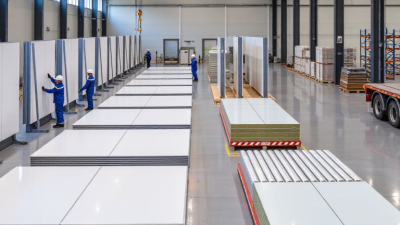
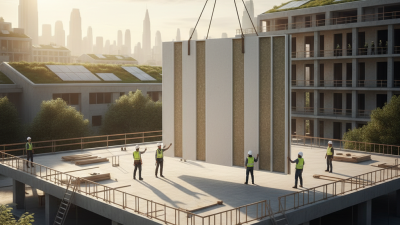
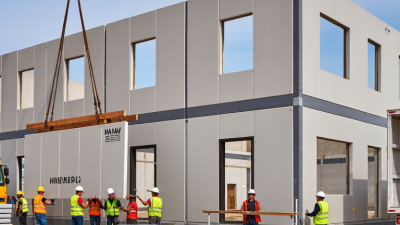
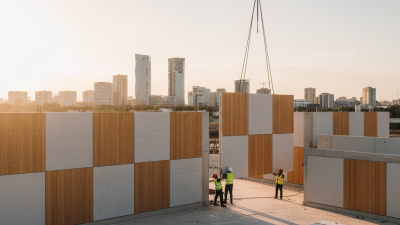
Choosing among the top 10 pre fab walls manufacturers requires more than comparing catalog prices. Global buyers need evidence of real production capacity, verified quality systems, and dependable export experience. A polished website proves little. Factory audits, sample panels, test reports, and customer references reveal more.
Mark Farmer, a respected construction strategist, famously warned, “Modernise or die.” His message applies strongly to pre fab walls. Manufacturers now compete through precision, speed, lower site waste, and adaptable building systems. However, these benefits depend on disciplined engineering and careful installation. A wall panel that performs well in a dry warehouse may behave differently after weeks of sea transport, coastal humidity, or repeated temperature changes.
This guide examines manufacturers through practical buyer concerns. These include panel materials, insulation performance, fire resistance, dimensional accuracy, customization, packaging, lead times, and after-sales support. It also considers whether suppliers communicate clearly across languages, standards, and time zones. That matters when a shipment arrives with unclear labels or incomplete installation drawings.
Some rankings remain imperfect. Public data is often uneven, and manufacturers may present different testing methods. Buyers should verify every important claim independently. A low factory price can become expensive after tooling, freight, duties, corrections, and site delays. The strongest suppliers usually provide traceable documentation and realistic delivery commitments. They also admit limitations.
For architects, contractors, developers, and distributors, this list offers a structured starting point. It is not a substitute for technical due diligence. Yet it can shorten the search and expose meaningful differences between experienced manufacturers and attractive but unproven alternatives.

Prefab wall systems are factory-produced wall assemblies transported to the site for rapid installation. They may be structural or non-structural, depending on the building design and local engineering rules. Common types include insulated sandwich panels, precast concrete walls, timber-frame panels, and light-gauge steel units.
The choice affects thermal performance, transport weight, fire resistance, and installation speed. Insulated panels suit warehouses and cold-storage buildings. Precast concrete performs well in schools, apartments, and infrastructure projects. Timber and steel panels support low-rise housing and remote construction. Grand View Research valued the global prefabricated construction market at about USD 153.7 billion in 2022, with continued growth expected through 2030.
The pressure is practical.
UNEP’s 2023 Global Status Report for Buildings and Construction found that buildings produced 37% of global energy-related emissions in 2022. Better wall insulation can reduce operational demand, but factory production and transport still require careful assessment. Buyers should request thermal conductivity values, fire-test evidence, moisture details, connection drawings, and lifecycle data. ISO 21930 provides a useful framework for environmental product declarations and construction-product assessment.
Site experience also matters. A perfectly designed panel may fail when lifting access is poor or tolerances are ignored. This is often underestimated. Global buyers should compare complete systems, not panel prices alone. Check local code compatibility, replacement access, warranty conditions, and installer training before selecting manufacturers for a top-ten supplier shortlist.
Top 10 Prefab Wall Manufacturers for Global Buyers
Key Criteria for Evaluating Prefab Wall Manufacturers
Choosing a prefab wall manufacturer requires more than comparing catalog prices. Experienced buyers should inspect factory controls, engineering depth, and documented project results. Ask for test reports covering fire resistance, acoustic performance, thermal values, moisture behavior, and structural loads. These records should match the exact wall system, not a similar product. Samples can mislead.
McKinsey’s report, Modular Construction: From Projects to Products, estimates that modular construction could create a US$130 billion market in Europe and the United States. It also identifies potential cost savings of up to 20 percent. Those benefits depend on repeatable production, accurate detailing, and reliable site coordination. Check dimensional tolerances, curing procedures, inspection frequencies, and nonconformance records. A clean factory tour is useful, but production data matters more.
Sustainability deserves measurable proof. The 2023 Global Status Report for Buildings and Construction states that buildings and construction generated about 37 percent of global energy-related emissions in 2022. Request environmental product declarations, recycled-content evidence, insulation data, and waste records. Also review export packaging, port experience, replacement-part policies, and warranty limits. Ask for references in similar climates. Some manufacturers provide impressive certifications but weak installation guidance. That gap can create cracked joints, water penetration, or delayed handover. Do not ignore it. Past performance is valuable, yet every project still needs independent design review and local code verification.
Top 10 Prefab Wall Manufacturers for International Buyers
International buyers need more than a factory list. They need dependable walls, clear documents, and predictable delivery. The top ten manufacturers should be judged by panel strength, insulation performance, production capacity, and export experience. Look for suppliers that provide tested fire ratings, moisture resistance data, and accurate dimensional drawings. A reliable manufacturer can explain its materials without hiding behind vague claims.
Site conditions matter greatly. A coastal project may require corrosion-resistant connectors and sealed joints. A cold-region building needs verified thermal values and careful edge insulation. Ask for samples before approving a large order. Check the surface finish, embedded hardware, corner accuracy, and packaging quality. Also review factory inspection records, loading photographs, and installation instructions. In practice, shipping damage can affect schedules more than production delays. Some buyers overlook this. I have found that careful packaging deserves the same attention as panel design.
Tips: Compare at least three quotations using identical specifications. Confirm Incoterms, warranty limits, replacement procedures, and local code compatibility. Request a mock-up wall before mass production. Keep communication records. Do not rely only on attractive brochures. A small mistake in opening dimensions can create expensive site adjustments. Manufacturers with responsive engineers are often more valuable than those offering the lowest price. Still, no supplier is perfect; buyers should document risks, allow inspection time, and review every assumption before payment.
| Rank | Anonymous Supplier Profile | Primary Wall Systems | Typical Factory Capability | Common Panel Thickness | International Compliance References | Export Readiness | Best-Fit Projects | Buyer Verification Priority |
|---|---|---|---|---|---|---|---|---|
| 1 | Profile A High-volume precast specialist |
Solid precast Sandwich panels | Automated casting lines, controlled curing, reusable steel molds | 100–300 mm | EN 206; EN 1992; ISO 9001-based quality systems | ★★★★★ | Industrial buildings, warehouses, infrastructure facilities | Dimensional tolerances, lifting design, third-party testing |
| 2 | Profile B Insulated façade panel producer |
Insulated sandwich Architectural panels | Large-format panel production with insulation-core assembly | 150–350 mm | ASTM C578 or EN 13163 insulation references; ISO 9001-based systems | ★★★★★ | Commercial buildings, cold-chain facilities, logistics centers | Thermal conductivity, fire classification, joint detailing |
| 3 | Profile C Lightweight concrete wall manufacturer |
AAC panels Lightweight blocks | Autoclave-controlled production and precision cutting | 75–250 mm | EN 771-4; ASTM C1693; local structural and fire codes | ★★★★☆ | Residential projects, partition walls, low-rise construction | Density, compressive strength, moisture behavior |
| 4 | Profile D Fiber-cement modular wall producer |
Fiber-cement boards Modular wall units | Continuous board forming, cutting, surface finishing | 8–30 mm board systems; 75–200 mm assemblies | ASTM C1186; EN 12467; applicable indoor-air-quality requirements | ★★★★☆ | Interior partitions, façades, wet-area construction | Water absorption, impact resistance, screw pull-out strength |
| 5 | Profile E Steel-framed insulated wall supplier |
Light-gauge steel Composite panels | Roll-forming, CNC cutting, automated framing and assembly | 90–250 mm | EN 1090; EN 14509; ASTM C645 where applicable | ★★★★☆ | Modular buildings, offices, schools, temporary facilities | Corrosion protection, connection design, thermal bridging |
| 6 | Profile F Glass-fiber-reinforced concrete specialist |
GRC/GFRC panels Decorative façades | Spray or premix forming, mold-based architectural production | 12–50 mm cladding; engineered backing systems | PCI guidance; ASTM C1228; project-specific façade testing | ★★★★☆ | Architectural façades, feature walls, renovation projects | Color consistency, anchor design, freeze-thaw durability |
| 7 | Profile G Precast boundary and retaining-wall producer |
Precast fence panels Retaining walls | Batch concrete production, vibration tables, outdoor curing yards | 80–200 mm | EN 206; ASTM C39; ASTM C90 or regional equivalents where relevant | ★★★☆☆ | Perimeter security, landscaping, agricultural and civil works | Reinforcement detailing, drainage, wind and soil-load calculations |
| 8 | Profile H Panelized timber wall manufacturer |
Timber frame SIP systems | Precision saw cutting, CNC routing, panel assembly and packing | 100–300 mm | EN 14081; EN 14509 for relevant SIP configurations; FSC or PEFC chain-of-custody options | ★★★☆☆ | Eco-housing, cabins, low-rise residential buildings | Moisture protection, fire performance, structural connection details |
| 9 | Profile I Decorative precast wall producer |
Architectural precast Textured panels | Custom molds, exposed-aggregate finishing, pigment-controlled batching | 60–250 mm | EN 13369; PCI architectural precast guidance; project-specific testing | ★★★☆☆ | Hotels, retail developments, public buildings and façades | Sample approval, color variation, surface repair procedures |
| 10 | Profile J Rapid-deployment modular wall supplier |
Demountable panels Portable modules | Lightweight panel assembly, standardized connectors, flat-pack logistics | 50–150 mm | Local fire, acoustic and structural requirements; ISO 9001-based systems where available | ★★★☆☆ | Site offices, healthcare extensions, classrooms and emergency housing | Reusability, installation manuals, spare-part availability |
| Buyer note: The profiles above are anonymized product-category benchmarks rather than company-specific claims. Final supplier selection should be based on current test reports, applicable local building codes, factory audits, approved samples, verified production capacity and project-specific engineering calculations. | ||||||||
For global buyers, prefab wall comparisons should start with the project brief, not the catalog. Concrete panels deliver strong fire resistance, sound control, and impact tolerance. They are heavy, however, and freight can dominate landed cost. EPS-cement panels are lighter and often easier to install. Their thermal performance is useful, but moisture detailing deserves close inspection. Steel sandwich panels offer rapid installation and consistent dimensions. Core selection changes fire, insulation, and acoustic results. Small differences matter.
Pricing should be compared on a delivered basis. Factory quotes may exclude molds, edge treatment, packing, inland transport, duties, and installation accessories. A lower unit price can become expensive after port handling. Concrete usually carries higher transport costs, while lightweight panels may reduce labor and foundation demands. Ask for tested thermal values, fire classifications, water absorption data, tolerances, and warranty terms. Independent reports are more reliable than brochures. I have seen attractive samples perform poorly when joints were left unsealed.
Lead times commonly range from two to ten weeks, depending on customization, tooling, production capacity, and inspection requirements. Stock systems move faster. Custom textures and oversized panels take longer. Confirm shop-drawing approval dates and replacement procedures before paying a deposit. Performance also depends on local installers, not just factory quality. This is often overlooked. A fair comparison scores material, performance, delivered price, and schedule risk together. No single panel wins every climate or building type.
Product Comparison: Materials, Performance, Pricing, and Lead Times
This market benchmark compares common prefabricated wall systems by typical material type. Prices show indicative export-level supply cost in USD per square metre, lead times represent factory production in calendar days, and thermal transmittance is shown as U-value in W/m²K. Lower U-values indicate better thermal insulation. Actual figures vary by thickness, fire rating, design requirements, order volume, shipping terms, and destination market.
For a global shortlist, certification should be checked at factory level, not accepted from a sales brochure. ISO’s Survey 2023 recorded more than 1.26 million valid ISO 9001 certificates worldwide. That figure shows adoption, not automatic quality. Ask whether the certificate covers wall production, testing, and the stated facility. Request fire-resistance reports, structural test results, material declarations, and batch traceability. A reliable supplier can identify the panel’s production date, core material, and moisture reading. Small details matter.
Shipping can decide the real purchase price. UNCTAD’s Review of Maritime Transport reports that over 80% of global merchandise trade moves by sea. Prefab walls need stronger planning than ordinary cargo. Confirm crate dimensions, gross weight, lifting points, container loading photos, and export packing standards. Compare Incoterms carefully. Port handling, inland delivery, duties, and unloading equipment may sit outside the quoted price. One overlooked crane can erase a seemingly attractive saving.
Supplier support is equally practical. The World Bank’s Logistics Performance Index 2023 evaluates customs, infrastructure, logistics services, tracking, and timeliness. Ask manufacturers to provide a shipment schedule, packing list, installation drawings, and a named technical contact. Response time should be tested before payment. Send a difficult question. See what happens. I would also request references from projects in similar climates. A polished sample can mislead, and my own checklist would still miss something unless an independent engineer reviews the final specifications.